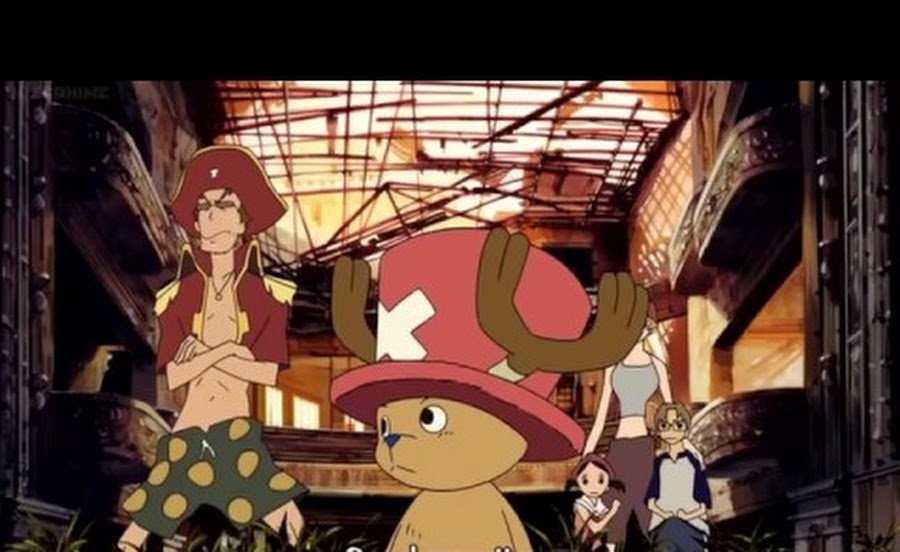
The world of One Piece usually radiates with vibrant energy, heroic camaraderie, and an unshakeable sense of adventure. But occasionally, even the brightest narratives cast long shadows. Such is the case with "One Piece: Baron Omatsuri and the Secret Island," a film that plunges the Straw Hat Pirates into one of their most unsettling and psychologically intense ordeals. If you've ever watched this particular entry and felt a chilling confusion, you're not alone. Understanding the Baron Omatsuri Plot & Ending Explained requires peeling back layers of grief, deception, and a unique botanical horror that stands apart in the series' lore.
This isn't just another swashbuckling tale; it's a profound exploration of attachment, loss, and the devastating consequences of refusing to let go. Directed by the visionary Mamoru Hosoda, known for his distinct aesthetic and narrative depth, the film diverges sharply from the typical One Piece formula, earning its reputation as one of the darkest chapters in the Straw Hats' journey.
At a Glance: Unmasking Omatsuri Island's Secrets
Before we dive into the murky depths of Baron Omatsuri's island, here's a quick rundown of what makes this film a compelling, albeit unsettling, watch:
- Dark Themes: Explores grief, death, and the psychological fragility of individuals and groups.
- Crew Conflict: The Straw Hats are intentionally fractured by mind games and manipulation.
- Baron's True Motive: Driven by unimaginable loss and a twisted desire for companionship.
- The Lily Carnation: Not just a pretty flower, but the source of the island's horror and Baron's power.
- Unique Animation: Mamoru Hosoda's distinct visual style sets it apart from the TV series.
- Ambiguous Ending: The Straw Hats emerge unharmed but with no memory of the trauma, leaving a lingering philosophical question.
The Unsettling Welcome to Omatsuri Island
The film opens with the Straw Hat Pirates, ever-hungry for adventure (and perhaps a good meal), spotting a flyer for a luxurious resort on Omatsuri Island in the Grand Line. Advertising relaxation and fun, it seems like a perfect detour from their arduous journey. However, upon arrival, they're greeted not by a typical resort manager, but by the enigmatic Baron Omatsuri, a towering, somewhat unsettling figure accompanied by a crew that feels… off.
The Baron, instead of offering poolside cocktails, immediately challenges Luffy and his friends to "The Trials of Hell." Luffy, ever the thrill-seeker, readily accepts, despite Nami's skepticism and Zoro's growing unease. These trials, presented as friendly competitions, quickly take on a sinister edge.
Initially, the trials seem innocuous enough. Usopp's ingenuity helps him win the first, while Zoro and Sanji, then Nami and Usopp, secure victories in subsequent rounds. Yet, beneath the surface of supposed teamwork, the Baron's subtle manipulations begin to sow seeds of discord. Each challenge seems designed to exploit existing tensions, highlight individual insecurities, and foster resentment within the close-knit Straw Hat family.
Cracks in the Crew: The Psychological Gauntlet
Mamoru Hosoda truly shines in depicting the slow, insidious breakdown of the Straw Hats' legendary bond. As the trials progress, the friendly competition sours. Arguments erupt over strategy, individual performances, and who gets credit. Luffy's unwavering optimism and blind trust in the Baron clash sharply with the growing paranoia of his crewmates, particularly Zoro and Robin, who sense a deeper, more malicious game at play.
Robin, always the quiet investigator, starts noticing the strange behavior of the island's flora and the Baron's peculiar crew. Her attention is drawn to a mysterious flower known as the Lily Carnation. Whispers among the Baron's seemingly jovial crew (particularly Muchigoro, one of the more expressive members) mention its location at the island's summit, hinting at its crucial importance.
Simultaneously, Chopper, with his medical acumen and keen observational skills, begins to uncover details about Baron Omatsuri's tragic past, sensing a profound sadness beneath the Baron's forced cheer. Just as he pieces together a critical part of the puzzle, a warning comes from an unlikely source: Luffy himself is cautioned that the Baron plans to split his crew. Before Chopper can fully articulate his discovery or its implications, he is tragically shot with an arrow, adding a chilling layer of vulnerability and genuine fear to the narrative.
This is where the film truly deviates from the series' usual lightheartedness. It’s a psychological thriller wrapped in a One Piece package, forcing viewers to confront the vulnerability of even the strongest bonds.
The Vanishing Crew & Escalating Paranoia
The shooting of Chopper marks a terrifying turning point. His disappearance, quickly followed by Usopp and then Robin, throws the remaining Straw Hats into a full-blown crisis. The crew, already frayed by the Baron's trials and their own internal conflicts, descends into chaos. Arguments become heated, trust erodes, and the usually unbreakable camaraderie splinters under the weight of fear and suspicion. Luffy, Nami, Zoro, and Sanji are left to grapple with the terrifying reality that their friends are being systematically targeted and abducted.
The Baron, now shedding his jovial facade, directly reveals the sinister secret of the Lily Carnation to Robin before she, too, vanishes. This revelation is central to understanding the true horror of Omatsuri Island. With the crew at its most divided and vulnerable, the Baron announces the final trial, a cruel twist designed to push them to their absolute breaking point. The tension is palpable, and the crew, unable to reconcile their differences or overcome their fear, makes the unthinkable decision: they split up. Each character, driven by their own individual instincts and anxieties, chooses a different path, leaving Luffy isolated and utterly heartbroken.
It's a stark, almost brutal depiction of how even the most devoted nakama can crumble under extreme psychological pressure and targeted manipulation. For a deeper dive into how this film contrasts with other One Piece adventures and its place within the franchise's cinematic universe, consider exploring our comprehensive guide on Baron Omatsuri and the Secret Island.
Baron Omatsuri's Twisted Truth: The Island of Grief
The full, devastating truth about Omatsuri Island slowly comes into focus. It's not a resort at all, but a meticulously constructed trap. Advertised as a paradise, its real purpose is to lure unsuspecting pirates to their doom. But why? The Baron’s motive isn't plunder or power; it's far more personal and heartbreaking.
Baron Omatsuri has suffered an unimaginable loss. His entire pirate crew, his cherished nakama, were wiped out in a devastating storm. Overwhelmed by grief and a profound loneliness, he refused to accept their death. Instead, he found the Lily Carnation, a mythical flower with an insidious power. This flower, he discovered, could "reincarnate" the deceased, giving life to spirits and memories.
The island, therefore, is an elaborate stage for his eternal suffering and hatred. He lures other pirate crews to his domain not to kill them directly, but to inflict upon them the same emotional agony he endured. By systematically breaking down their bonds, causing them to fight, and making them disappear, he forces them to experience the pain of losing their nakama, mirroring his own tragic past. His crew, the seemingly boisterous individuals who assisted him in the trials, are not living beings at all. They are constructs, animated by the Lily Carnation, designed to maintain his illusion of companionship and assist in his cruel game.
The Lily Carnation: A Flower of False Rebirth
At the heart of Omatsuri Island's horror lies the Lily Carnation. This isn't just a powerful plant; it's a manifestation of unchecked grief and delusion. The flower of reincarnation, as it's known, holds the key to Baron Omatsuri's continued existence and his twisted charade. It takes the spirits and memories of the dead and breathes a semblance of life back into them.
The Baron's "crew" — Muchigoro, Kerda, and their comrades — are spectral beings, brought forth by the Lily Carnation to inhabit their old forms. They are, in essence, zombies of memory, loyal only to the flower and the Baron's will, helping him maintain the illusion of his past life. They appear to be living, interacting, even expressing emotions, but they are hollow echoes, preventing the Baron from truly moving on.
As the film reaches its climax, the Baron reveals his ultimate plan: he feeds the remaining Straw Hats, one by one, into the gaping maw of the Lily Carnation. This isn't just to make them disappear; it's to have them "reincarnated" as part of his new, forced crew, filling the void left by his original nakama. He seeks to replicate his lost family, forcing new victims into the roles of his departed friends, perpetuating his cycle of grief and denial. The sight of the Straw Hats being consumed by the monstrous flower is one of the most visually disturbing moments in One Piece history, underscoring the film's dark thematic core.
Luffy's Battle Against Despair and Deception
With his crew dismantled and devoured, Luffy stands alone against Baron Omatsuri and his ghastly "nakama." This is arguably one of Luffy's most challenging battles, not just physically, but emotionally. He's fighting against a man consumed by grief, whose actions, however abhorrent, stem from deep, personal pain. Luffy's usual unwavering optimism is tested to its limits as he faces the very real possibility that his friends are gone forever.
The battle is fierce, and the Baron, empowered by the Lily Carnation and his twisted resolve, proves to be a formidable opponent. However, Luffy is not entirely alone. In a surprising turn, other pirates who had previously been victimized by the Baron and his trials — some who had lost their own crews — return to assist Luffy. They've recognized the true evil of the Lily Carnation and the Baron's manipulation, and they join forces with Luffy, motivated by a desire for revenge, justice, or simply to prevent further tragedy.
This collective effort, a rare instance of non-Straw Hats aiding Luffy so directly in a major film confrontation, highlights the universal theme of false hope versus genuine camaraderie. Together, they manage to overpower the Baron. With the Lily Carnation's power disrupted and its true, fragile nature revealed, the Baron is finally defeated, collapsing in despair as his illusions crumble around him.
The Ending Explained: Forgiveness, Forgetting, and Moving On
The climax brings Baron Omatsuri to a raw, vulnerable state. With his power broken and his "crew" dissolving, he is forced to confront the crushing loneliness and the false nature of his bonds. He confesses his profound grief and the desperate lengths he went to in order to escape the pain of loss. It’s a moment of devastating clarity for the Baron, as he realizes his crew were nothing more than constructs created by the Lily Carnation, a cruel imitation of the family he lost.
In a poignant and ghostly apparition, his true deceased crewmates appear before him. These aren't the Lily Carnation's illusions, but the genuine spirits of his beloved nakama. Their message is one of profound compassion and wisdom: they advise him to let go of their loss, to forget the past, and to find new friends, new nakama, to journey with. This moment of spectral guidance is key; it's about forgiveness for himself and acceptance of life's painful realities.
Then comes the most debated part of the ending: the Straw Hats reappear, unharmed, safe, and sound. However, they have absolutely no memory of the harrowing incident on Omatsuri Island. They simply wake up, confused but otherwise normal, ready to continue their grand adventure.
Why no memory? This narrative choice serves several purposes:
- Psychological Impact: The trauma of Omatsuri Island was so profound that a direct memory would likely shatter their spirits and their fundamental trust in each other and the world. Forgetting allows them to heal and continue their journey with their inherent optimism intact.
- Thematic Resolution: It emphasizes the destructive nature of Omatsuri's grief. His actions were so perverse that the only way for the victims to truly escape was to be cleansed of the memory of it.
- Narrative Continuity: It allows the film to explore incredibly dark themes without permanently altering the core personalities or relationships of the Straw Hats for the main series. They remain the beloved characters fans know, untouched by a trauma that would otherwise leave deep scars.
- A Clean Slate for Baron: It implies that for Baron Omatsuri to truly move on and find new companions, the cycle of pain he inflicted must also end, leaving no lingering resentment or fear in his potential new nakama.
The ending, while seemingly convenient, is a powerful statement about the nature of grief, the importance of letting go, and the resilience required to forge genuine connections in a world filled with both wonder and sorrow.
Deeper Themes: Beyond the Bizarre
"Baron Omatsuri and the Secret Island" resonates long after the credits roll because of its unflinching exploration of complex themes, a hallmark of Mamoru Hosoda's direction.
- Grief and Loss: This is the central driving force of the entire film. Baron Omatsuri's inability to process the death of his crew leads him down a path of delusion and cruelty. The film starkly illustrates the dangers of unchecked sorrow and the refusal to accept the natural cycle of life and death. It questions whether eternal companionship, achieved through deception, is truly worth the price of one's soul.
- The Dangers of Attachment: The Baron's story is a cautionary tale about extreme attachment. While the Straw Hats celebrate their bonds, the Baron's experience shows how the inability to release attachments can turn love into obsession and self-destruction. His clinging to the past literally creates monsters.
- The Strength of True Nakama vs. False Bonds: The film draws a stark contrast between the Straw Hats' genuine, earned bonds, which are tested and almost broken, and the Baron's fabricated crew. Luffy's willingness to fight for his friends, even when they're gone, ultimately proves the superiority of authentic connection over a life sustained by illusions. The spectral appearance of the Baron's real crew, guiding him to seek new, living nakama, solidifies this theme.
- Mamoru Hosoda's Distinct Aesthetic and Vision: Hosoda's animation style, characterized by fluid, exaggerated movements and a slightly more angular, less overtly "anime" look, perfectly complements the film's darker tone. His focus on internal psychological states and complex character motivations elevates the narrative beyond a simple adventure story. This is why the film often feels so different from other One Piece entries; it’s a director's vision deeply imprinted on existing IP.
- A "Dark" One Piece Film: This movie is often cited as one of the darkest in the One Piece series because it delves into themes rarely touched upon in the franchise: the psychological torment of losing your nakama, the insidious nature of grief, and the moral ambiguity of a villain driven by sorrow rather than malice. It challenges the very ideals of friendship and adventure that define One Piece, making it a unique and powerful entry.
Misconceptions About Baron Omatsuri's Motives
It's easy to label Baron Omatsuri as simply "evil." However, this oversimplifies his character. A common misconception is that he was inherently malevolent. In reality:
- He wasn't truly evil, but broken: His actions were driven by immense, unprocessed suffering and a desperate attempt to recreate a lost paradise. While his methods were abhorrent, his core motivation stemmed from a place of profound grief and loneliness.
- He wasn't seeking power or wealth: Unlike many One Piece villains, his goal wasn't to dominate the world or amass treasure. It was to preserve an illusion, to escape the crushing reality of his loss, and to inflict his pain on others, creating a shared, albeit twisted, camaraderie of suffering. Understanding this distinction is crucial to appreciating the film's nuanced take on villainy.
The Lasting Impact of Omatsuri Island
"Baron Omatsuri and the Secret Island" leaves an indelible mark on those who watch it. It's a testament to the versatility of the One Piece universe and the power of animation to explore mature, complex themes.
This film teaches viewers valuable lessons about the fragility of life, the inevitability of loss, and the strength required to accept sorrow and move forward. It underscores that true friendship isn't about avoiding conflict or pain, but about weathering storms together and finding the resilience to rebuild. Its unique place in the One Piece canon ensures it remains a powerful, thought-provoking, and unforgettable experience, offering a stark reminder that even in the sunniest of pirate adventures, shadows can still loom large.
Ultimately, the tale of Baron Omatsuri is a poignant meditation on how we cope with grief. Do we embrace the pain and grow, or do we succumb to it and become trapped in a self-made prison of the past? For the Straw Hats, the answer, even without their memory, lies in the unspoken truth of their unbreakable bond, ready to face the future, whatever trials it may bring.